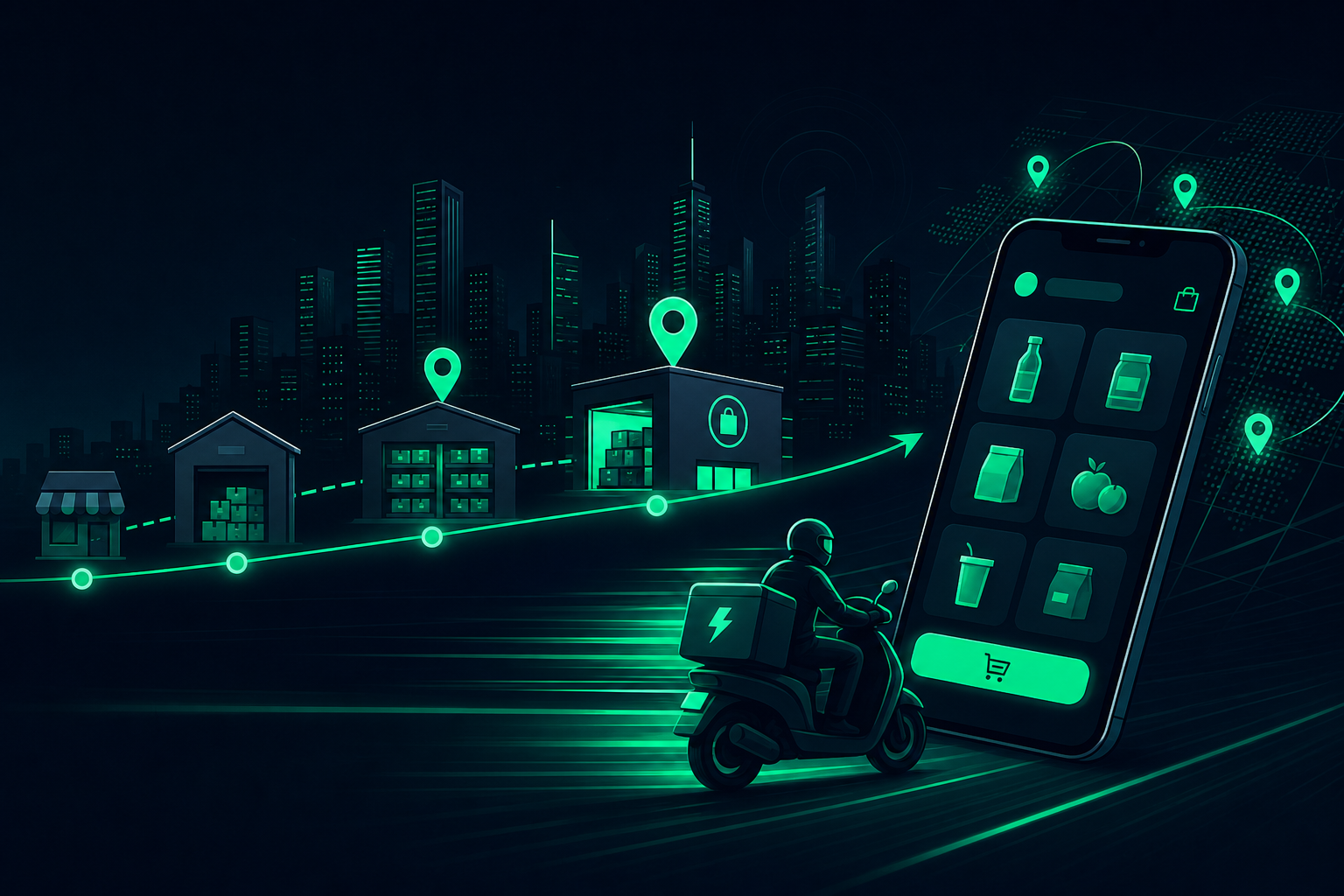
For many consumers, quick commerce (q-commerce) is simply about getting groceries delivered in under 10 minutes. In reality, the real strength of this model lies in habit formation and instant gratification.
Unlike traditional e-commerce, which emphasizes a wide assortment and delivery windows of 2–3 days, quick commerce relies on dark store infrastructure, or micro-warehouses placed in dense urban areas. These enable extremely fast fulfillment and create high-velocity purchasing experiences. As a result, consumer behavior is shifting from planned purchases to immediate, need-it-now transactions.
One of the major reasons brands are exploring commerce-driven advertising is the increasing cost of traditional digital marketing.
The challenge:
On platforms like Meta and Google, brands compete for attention in crowded feeds. This competition drives up cost-per-click while often reducing conversion efficiency.
The opportunity:
Quick commerce platforms operate in high-intent environments. Users are not just browsing, they are actively looking to purchase. Advertising within these ecosystems allows brands to reach customers closer to the moment of transaction, potentially lowering CAC and improving return on ad spend.
Another emerging trend in quick commerce ecosystems is non-endemic advertising, where brands that do not directly sell on the platform advertise within it.
For example, industries such as insurance, entertainment, or financial services can run campaigns inside quick commerce apps.
Why it works:
These platforms hold rich datasets on consumer purchasing behavior, location, and spending patterns.
The result:
Brands can target users based on real buying signals and reach them at moments of high engagement and purchasing readiness.
The ecosystem is also evolving from Retail Media Networks (RMNs) to a broader Commerce Media framework.
Retail Media:
Advertising placed within a retailer's own digital properties—for example, sponsored product placements in search results within a grocery app.
Commerce Media:
A broader approach where commerce data powers advertising across the wider internet. This allows brands to connect ad exposure with real transaction outcomes, tracking the customer journey from first impression to final purchase—even when fulfillment happens within minutes.
Quick commerce platforms tap into a specific type of consumer behavior:
As logistics technology improves and consumer expectations evolve, the distinction between traditional e-commerce and quick commerce is likely to blur.
Speed is becoming a competitive advantage across categories. Over time, industries ranging from fashion to electronics may adopt elements of the quick commerce model, such as localized fulfillment and rapid delivery to meet rising expectations.