There's a pattern showing up across brand's growth dashboards right now.
Advertising costs keep rising. Yet most brands aren't reaching new buyers. They're spending more to reach the same buyers they were targeting last year.
Amazon CPCs continue climbing. Meta CPMs keep inching upward. Every mature category feels more competitive than it did 12 months ago.
The usual explanation is that advertising has become more expensive. And that's partly true. But there's more to the story.
Most growth strategies are built around visible demand — buyers who are already searching, already comparing, already ready to purchase. The moment that demand becomes visible, every competitor can see it too.
The result isn't just higher acquisition costs. It's a growing dependence on the same pool of buyers. Which is why some brands watch TACoS rise even when their campaigns are getting better.
ACoS measures efficiency of a single campaign. TACoSincludes something ACoS doesn't: the rest of the business. That's why it often tells a different story than the ad account. When growth teams keep zeroing in on it as an isolated number and keep tuning campaigns that aren't broken, only ACoS moves. The real problem sits outside the ad account.
TL;DR
A rising TACoS doesn't automatically mean your advertising is inefficient. It can signal one of two things. The key question isn't “Why is TACoS rising?” It's “What is TACoS buying?”
Investment TACoS
Dependency TACoS
ACoS is a campaign-level question. Did this specific ad earn back what it cost?
TACoS pulls organic revenue into the picture. By design, ACoS only counts revenue that came through an ad. TACoS counts the rest too — the organic halo that builds when paid campaigns lift sales velocity, push organic rankings, and pull in repeat purchases. Read together, the two metrics tell you whether the business is compounding or whether the ads are doing all the work.
A brand spending ₹7.5L/month on ads with ₹75L in total revenue has a 10% TACoS. If ad spend climbs to ₹11L and total revenue stays flat, TACoS rises to ~15%.
The ads didn't break. The revenue plateaued.
ACoS can look stable — even improve — while TACoS deteriorates. A campaign with a 20% ACoS and strong attributed ROAS can coexist with a business where organic revenue is eroding, customer acquisition cost is rising, and blended ROAS across all channels is shrinking.
PCO Studio's analysis captures the pattern: sellers push ACoS from 25% down to 18% by pausing high-reach keywords, then watch their total revenue collapse by 30%. The campaign looked better. The business got worse.
A rising TACoS isn't one thing. It's at least two — and the difference between them is the difference between a brand pulling ahead and a brand falling behind.
In the first case, the halo is intact. Spend is going up because the brand is investing in visibility, and organic revenue is keeping pace. In the second case, the halo has gone quiet. The paid spend is still converting, but the rest of the business isn't compounding alongside it — branded search, repeat rates, organic visibility have all flatlined.
Picture two skincare brands. Same category. Same 18% TACoS.
Brand Aincreased ad spend to enter adjacent subcategories. It's building a share of voice against established players. Organic revenue is compounding because the paid campaigns are driving branded search, product reviews, and reorder behavior. TACoS is elevated because the brand is ahead of the curve.
Brand B has maintained the same budget for 14 months. Organic revenue has flatlined. The ads are holding existing positions against rising competition. TACoS is elevated because the same spend is producing diminishing returns against the same audience.
One is building future demand. The other is paying to hold its ground.
| Investment TACoS | Dependency TACoS |
|---|---|
| Creates future demand | Captures existing demand |
| Builds visibility | Defends visibility |
| Expands market share | Maintains market position |
| Supports organic growth | Requires continued paid investment |
| Gets stronger over time | Becomes harder to scale efficiently over time |
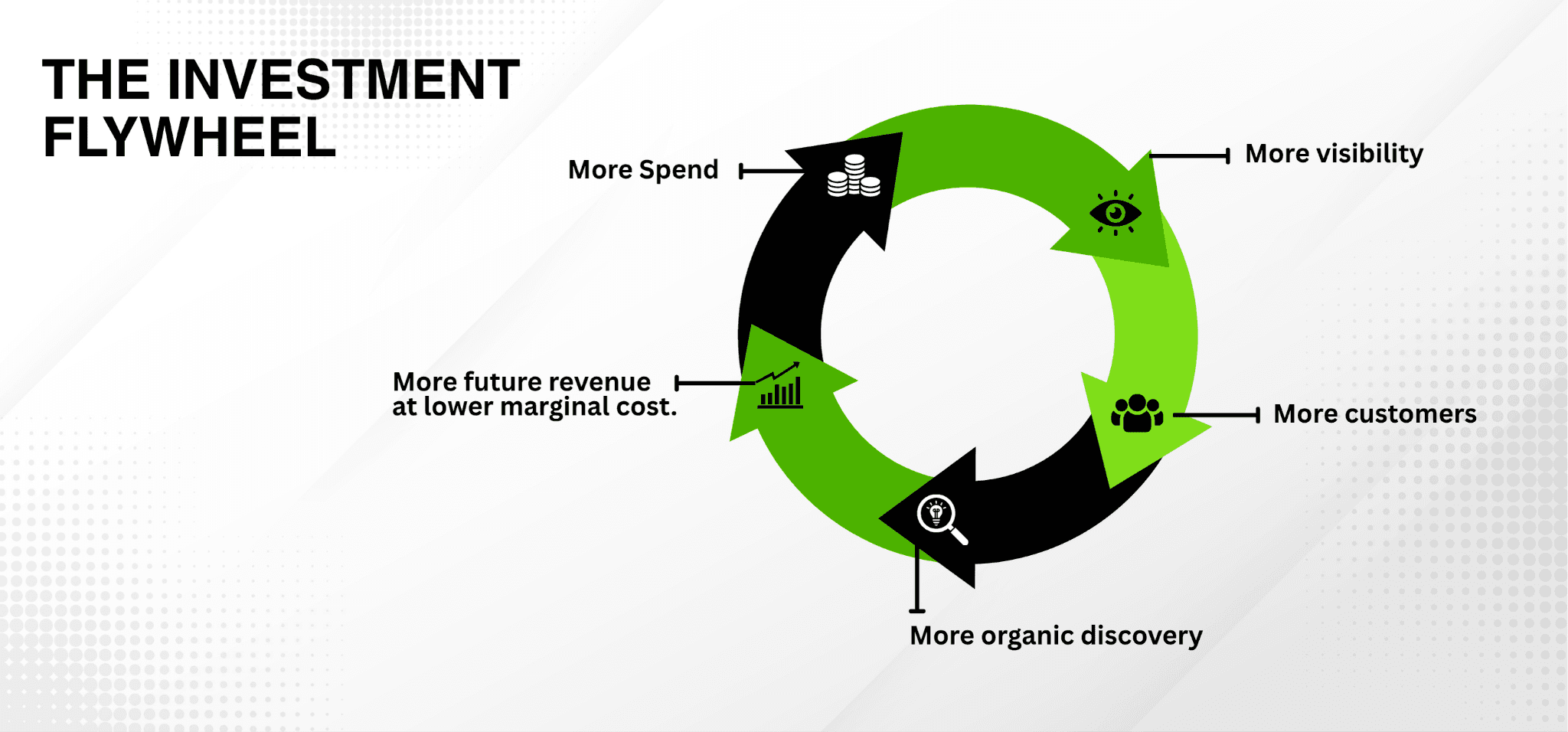
Spending before you earn isn't a leak. It's how new markets get entered, new lines get launched, and new categories get built. The spend goes toward first-time customers, branded search volume, organic ranking velocity, and market share.
TACoS rises during this phase because advertising is doing what it should — creating future demand. Revenue follows spend, but with a lag.
As organic traffic, branded search, and repeat purchasing start compounding, TACoS stabilises and declines.
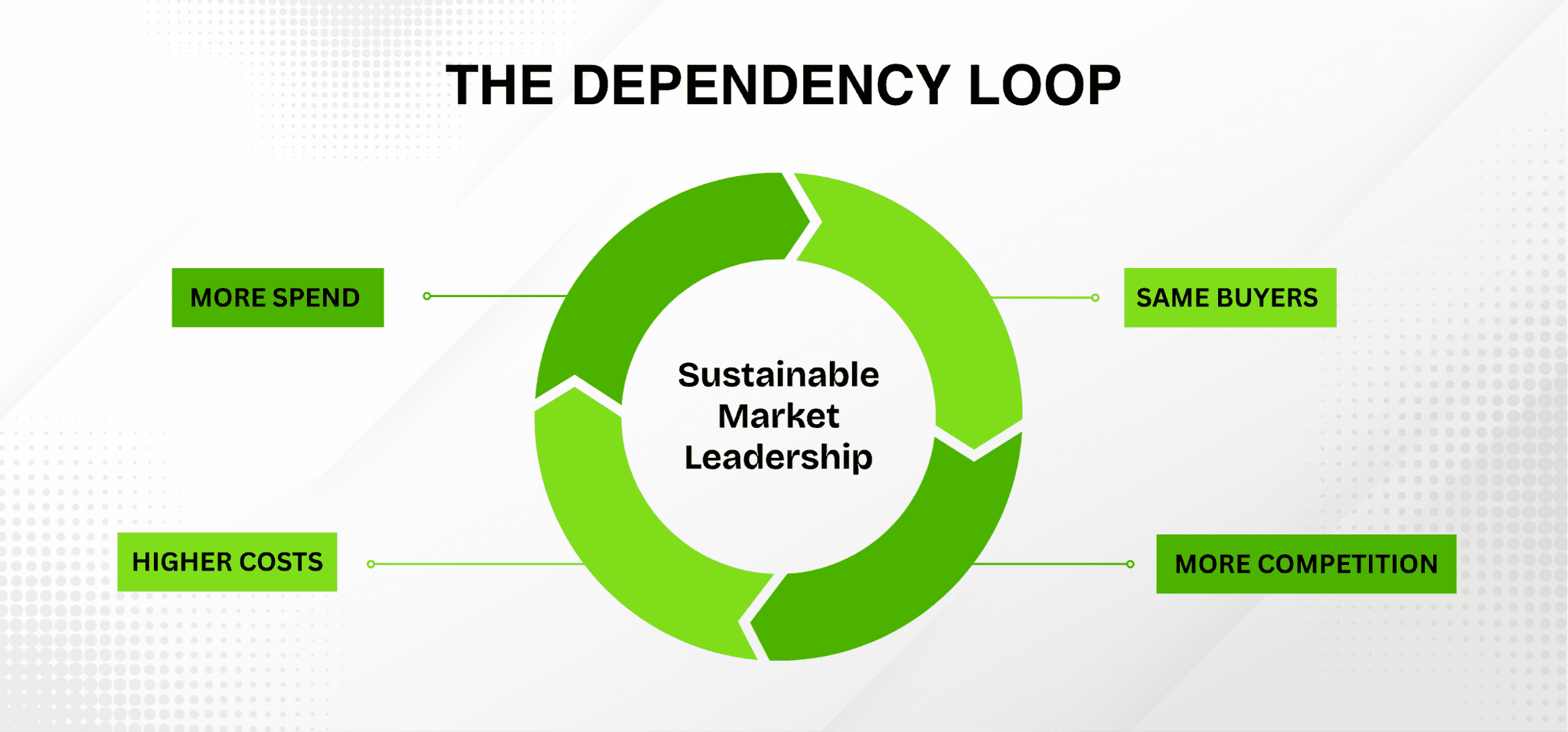
There's a different kind of rising TACoS — one no amount of campaign optimization will fix. In a mature category with a fixed pool of buyers, the cost of reaching each one climbs every year regardless of how well any single account is managed.
Amazon's average CPC hit $1.22 in 2026 — up roughly 10–15% year-over-year. Meta's median CPA across ecommerce reached $29.99 the same year, an 8.5% jump. CPMs rose approximately 20%.
If total revenue doesn't grow in proportion, TACoS absorbs the inflation. The brand hasn't changed strategy. It's paying more for the same result.
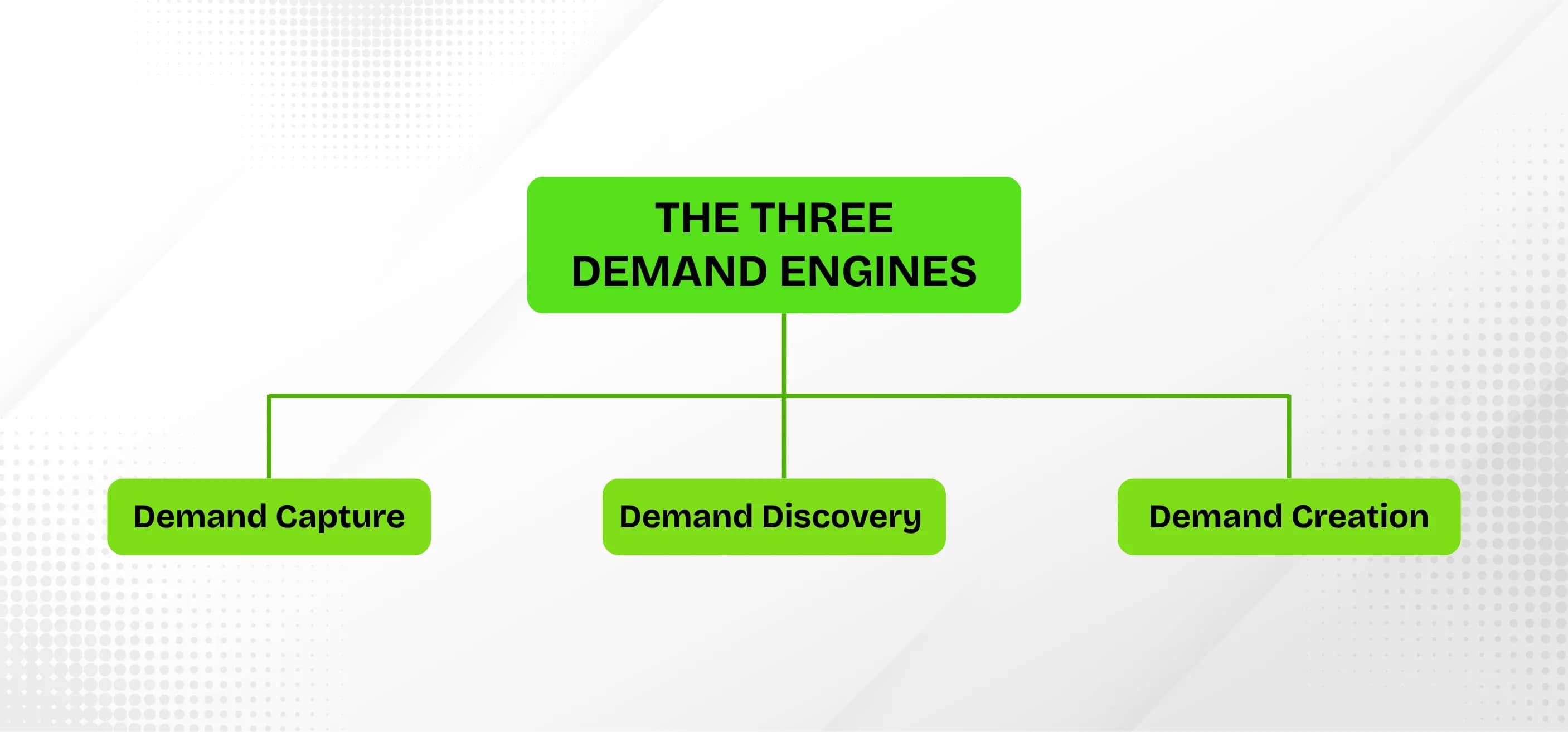
Most growth conversations split neatly into two buckets: demand generation vs demand capture. That model is incomplete. A more useful framework has three engines. Each has different economics, different competition dynamics, and different implications for TACoS.
This is the part of demand every brand can already see. The buyer is searching, comparing, and ready to choose. They type “best protein powder” or “night cream for dry skin” — and they're looking for someone to convert them.
Search ads, shopping placements, retargeting, marketplace ads — this is where they perform. Demand capture is essential. No brand grows without converting in-market buyers.
But demand capture converts existing demand into revenue. By itself, it doesn't expand the demand pool. It is a conversion mechanism. And when it becomes the entire strategy, the brand starts paying more every quarter for access to the same buyer pool.
This is the part of demand that doesn't show up in your keyword tool yet. The buyer has a problem but hasn't decided what they need. They're looking up “high protein diet” or “postpartum weight management” or “muscle recovery after 40” — research queries, not purchase queries.
These queries carry intent, but the buyer hasn't reached comparison mode yet. McKinsey's consumer decision journey shows that consumers add and remove brands during active evaluation — and the initial consideration set forms well before any transactional search. Brands in the initial consideration set hold a disproportionate advantage by the time the purchase happens.
Demand discovery happens before the search query appears. Fewer competitors are paying attention. The audience is cheaper to reach. And the buying journey is still taking shape.
The infrastructure for this looks different from demand capture. It requires reading behavioral signals — what audiences are engaging with across apps, content platforms, and digital environments before intent becomes a search query.
This is where audience intelligence becomes valuable. Brands need a way to identify emerging intent before it turns into visible demand that every competitor can target.
The brands gaining an advantage in this layer aren't necessarily spending more. They're seeing buyers earlier. The economics shift when you move upstream: fewer bidders, clearer signal, lower cost per acquisition.
This is where demand doesn't exist yet — until a brand convinces the market it should.
Oura created smart ring-based health monitoring. Liquid Death built a lifestyle brand around canned water. AG1 redefined daily nutrition supplementation. Bain's research on category creation shows that successful creators capture disproportionate market share because they set the terms of evaluation.
Demand creation changes the game entirely. Instead of competing for existing demand, the brand expands the demand pool itself. It side-steps the competition dynamic entirely.
Few brands can build categories from zero. But every brand can discover demand earlier than its competitors. That's where the most accessible strategic leverage sits.
The problem isn't paid acquisition. Paid acquisition is a tool. The problem is what happens when the entire paid strategy is demand capture — when every rupee of ad spend goes toward buyers who are already searching, already comparing, already visible to every competitor with a budget.
The economics become predictable. The number of people searching “best face serum” or “whey protein price” in any given month is relatively fixed. More advertisers competing for those searches means higher CPCs, higher CPMs, and higher customer acquisition cost — for everyone. Unless the audience pool expands through discovery or creation, the economics tighten regardless of how well any single account is run.
There's a structural reason this happens. Keyword tools, marketplace analytics, and advertising dashboards make search demand visible to every competitor at once. Everyone sees the same volume. Everyone bids on the same terms. Visible demand is visible to everyone — which is exactly why CPCs and CPAs in mature categories climb regardless of what's happening inside the ad account.
By the time someone types a query, they've already consumed content, formed preferences, and narrowed the field. Brands that show up only at the search stage are competing within a set they had no hand in building.
Demand discovery gives brands something search rarely does anymore: an information advantage. For most brands, the challenge isn't accessing more demand. It's identifying demand before it becomes visible to everyone else.
That requires a different capability than media buying. It requires understanding audience behavior, emerging intent, and the signals buyers leave long before they enter the market.
TACoS alone won't answer this. Four diagnostics, tracked together over time, will.
There's a question every TACoS report skips: would this revenue have happened anyway?
That's the question incrementality testing is built to answer. It uses control and treatment groups to isolate net-new revenue driven by an ad — versus revenue that would have arrived without it.
Low Incrementality
High Incrementality
Uber's marketing data science team used incrementality testing to find that a large portion of its ad budget was reaching users who would have converted without the ad — leading to tens of millions in reallocated spend.
Google Ads offers conversion lift studies. Geo-lift experiments work across channels. The point isn't to run one test — it's to build incrementality measurement into the regular cadence of budget decisions.
If paid spend is generating demand, branded search volume should grow over time. A rising branded search trend is one of the clearest signs spend is doing more than converting. If branded search is flat while ad spend climbs, the spend is converting demand without expanding the brand's footprint.
Organic traffic shows whether paid spend is compounding into anything durable. As paid campaigns drive awareness and initial sales, organic rankings should improve through higher sales velocity, better conversion rates, and stronger product relevance signals.
If organic traffic grows alongside or independently of ad spend, the halo is working. If organic traffic stays flat while spend rises, the brand is converting visible demand without expanding its underlying base.
Share of voice measures visibility across the category — paid and organic combined. Growing SOV usually means the brand is becoming harder to ignore. Shrinking SOV despite growing spend means competitors are outperforming or outspending.
It's a leading indicator. Research from Nielsen has consistently shown that brands with share of voice greater than share of market tend to gain ground. Brands whose SOV trails their share of the market tend to lose it.
TACoS is a signal, not a target. Brands in aggressive growth phases will see elevated TACoS, and that's not a problem to fix — it's a phase to execute through.
But the signal becomes useful only when read against the demand strategy behind it. Two brands at the same TACoS are not at the same place in the market. One is buying its way into a future buyer pool. The other is paying to stay in the one it already has.
Brands don't become dependent on advertising. They become dependent on visible demand. Because by the time the dashboard makes the problem obvious, the brands investing in discovery have already found the next pool of buyers.
That's the part TACoS will tell you — if you're reading it as a business metric, not an ad metric.